1. Overview
Gon Freecss is the protagonist of Yoshihiro Togashi's Hunter x Hunter, a young boy from Whale Island who discovers that his father, Ging Freecss, is alive and working as one of the world's most legendary Hunters. Determined to find him, Gon leaves his home and Aunt Mito behind to take the notoriously dangerous Hunter Exam, a journey that throws him into a world of unimaginable danger, wonder, and possibility. What sets Gon apart from typical shonen protagonists is his extraordinary duality: he is simultaneously the most straightforward, open-hearted character in the series and arguably its most terrifying when pushed to his emotional limit. His moral compass is entirely self-defined, guided not by societal rules but by his own simple, unshakable sense of right and wrong. This autonomy allows him to form deep bonds with allies like Killua Zoldyck while also making choices that shock even his closest friends. Gon's journey spans the Hunter Exam, the deadly Heaven's Arena, the crime-ridden Yorknew City, the strategic card game Greed Island, and the brutal Chimera Ant arc, each phase reshaping his understanding of strength, friendship, and sacrifice. His character is a sustained exploration of how pure-hearted optimism can coexist with immense destructive potential, a contradiction that makes him one of shonen manga's most complex protagonists.
2. Appearance
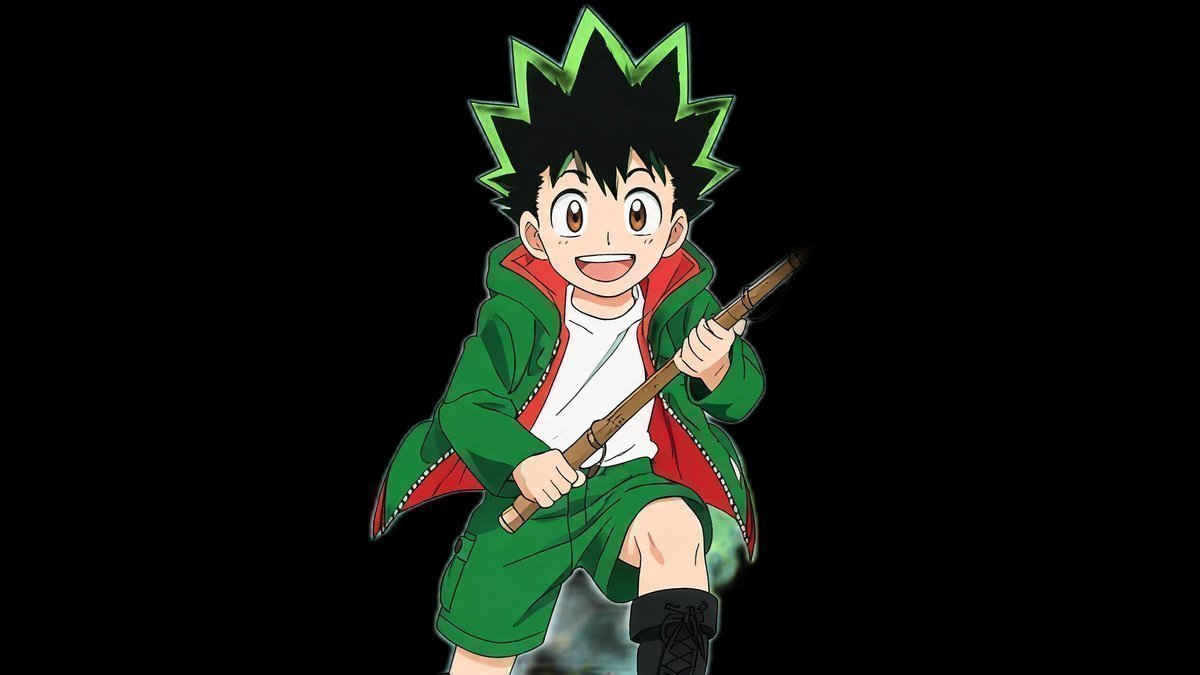
Gon Freecss is a short, athletic boy with spiky black hair and large, expressive dark brown eyes that reflect his straightforward personality. At the start of the series, he stands approximately 154 centimeters tall and wears a distinctive green and yellow jacket over a light green shirt, accompanied by green shorts and classic black boots. His design is deliberately simple and functional, mirroring his rural upbringing on Whale Island where practicality outweighs fashion. The green color palette connects him visually to nature and the island environment that shaped his early years. His fishing rod, a gift from his Aunt Mito, accompanies him throughout the early arcs and becomes a signature accessory even after he transitions to Nen-based combat. As the series progresses, Gon's appearance undergoes subtle but meaningful changes. During the Greed Island arc, he wears a more combat-oriented outfit with a sleeveless green vest and shorts, reflecting his growing physical maturity. His muscles become more defined through rigorous Nen training under Biscuit Krueger. The most dramatic transformation occurs during the Chimera Ant arc, where Gon's grief and rage trigger a premature Nen contract that ages him into a tall, gaunt young man with tangled white hair and a muscular, skeletal frame. This form, achieved by sacrificing his potential as a Nen user in exchange for overwhelming power, is a physical manifestation of his psychological trauma. In his post-Chimera Ant state, Gon returns to his original appearance but has lost access to Nen entirely, a permanent consequence of the contract. His appearance throughout the series functions as a visual barometer of his emotional and physical state, with the adult form serving as one of anime's most striking depictions of the cost of vengeance.
3. Personality
Gon Freecss is defined by a personality that appears simple on the surface but reveals profound complexity upon closer examination. His most obvious traits are optimism, honesty, and an almost supernatural ability to make friends. He approaches every situation with childlike curiosity and genuine warmth, forming instant connections with people from all walks of life. His friendship with Killua Zoldyck is the emotional anchor of the series, built on mutual trust and acceptance despite Killua's assassin upbringing. Gon's loyalty to his friends is absolute, and he will go to any length to protect or save them. This same openness extends to his worldview: he judges people by their actions rather than their reputations, treating the former assassin Killua, the criminal Leorio, and the vengeful Kurapika as equals from their first meeting. Beneath this warmth lies a core of steel. Gon possesses an unshakable will and a stubbornness that borders on recklessness. Once he sets a goal, he pursues it with single-minded determination, often ignoring personal risk. This trait serves him well in combat but also leads him into situations that more cautious individuals would avoid. His intuition is remarkably sharp, allowing him to read people and situations in ways that surprise more experienced Hunters. He frequently demonstrates moments of striking insight that reveal an intelligence that is instinctual rather than academic.
The darker aspect of Gon's personality emerges when those he cares about are threatened or harmed. His moral framework is entirely personal, not universal. He does not fight for abstract concepts like justice or the greater good. He fights for specific people. This self-centered morality means that when someone hurts a person he loves, Gon is capable of a cold, terrifying fury that shocks even his allies. This is most vividly demonstrated during the Chimera Ant arc, where the death of Kite triggers a transformation that strips away his warmth and leaves only vengeance. In this state, Gon threatens to kill Komugi, an innocent girl, purely to manipulate Neferpitou. His own friend Killua is terrified by what he sees. This capacity for darkness is not a contradiction of his personality, but its logical extension: the same intensity that makes him a loyal friend makes him a merciless enemy. Togashi deliberately subverts the typical shonen hero archetype by showing that Gon's childlike simplicity, when combined with overwhelming power and moral subjectivity, produces something genuinely frightening. His character arc asks whether a person who acts purely on emotion and personal loyalty can be called a true hero, and the answer is deliberately ambiguous.
4. Abilities
Gon Freecss is a natural Enhancer, one of the six Nen types, which means his abilities focus on amplifying his physical capabilities to superhuman levels. Enhancers are known for their straightforward, powerful techniques, and Gon's combat style exemplifies this philosophy. His base physical abilities are already exceptional from years of living in the wild on Whale Island, where he developed incredible strength, reflexes, and sensory acuity. His sense of smell is particularly acute, allowing him to track targets over long distances and identify individuals by their unique scent signature. Under the mentorship of Wing and later Biscuit Krueger, Gon learns the fundamental Nen techniques of Ten, Ren, Zetsu, and Hatsu. His training with Biscuit on Greed Island is especially rigorous, transforming him from a raw talent into a disciplined fighter capable of controlling his aura with precision. He masters the advanced technique of Ko, which concentrates all aura into a single point for maximum impact, and develops exceptional aura output that compensates for his relatively simple technique.
Gon's signature ability is Jajanken, a three-part attack based on the rock-paper-scissors game that channels his Enhancement abilities through different combat applications. Guu (Rock) concentrates all his aura into a single devastating punch, his most powerful attack but one that requires a wind-up period to charge. Pa (Paper) converts his aura into a projectile that he flicks from his fingertips, giving him a ranged option that enemies often do not expect from a close-range Enhancer. Choki (Scissors) shapes his aura into a blade, allowing him to cut through dense materials. Jajanken's charge time is a deliberate weakness that forces Gon to rely on clever positioning and his opponents' mistakes to land hits. He develops creative ways to hide the wind-up, such as using the terrain or his fishing rod to create openings. During the Chimera Ant arc, Gon pushes his abilities to their absolute limit by making a Nen contract: he sacrifices all his future potential as a Nen user in exchange for the power needed to defeat Neferpitou. This transforms him into an adult form with incomprehensible strength that far exceeds even Chimera Ant Royal Guard levels. He defeats Pitou with a single Rock-enhanced punch, but the cost is catastrophic. After the battle, Gon's body is broken, and he loses the ability to use Nen permanently, a fate that persists even after his recovery. His abilities, both gained and lost, are central to the thematic core of Hunter x Hunter, illustrating that power always comes at a price.
5. Story Arcs
Gon's journey through Hunter x Hunter is structured around distinct story arcs, each testing different aspects of his character. The Hunter Exam arc introduces Gon as he leaves Whale Island and takes the deadly Hunter Examination alongside Leorio, Kurapika, and his future best friend Killua Zoldyck. The exam pushes him to his physical limits and introduces the brutal realities of the Hunter world, including the first major villain, Hisoka. Gon impresses the examiners with his instinctual combat ability and unwavering determination, earning his Hunter license through a combination of raw talent and sheer willpower. The Heaven's Arena arc is where Gon first learns Nen. Paired with Killua, he trains under Wing and Zushi, discovering his Enhancer type. His fight with Hisoka here is a pivotal moment, as Hisoka recognizes Gon's potential and spares him, creating a complex dynamic between the two that persists through the series.
The Yorknew City arc shifts the tone dramatically as Gon and his friends are drawn into a conflict between Kurapika and the Phantom Troupe. Gon serves primarily as emotional support for Kurapika during this arc, demonstrating his capacity for loyalty even when he cannot directly contribute to the main conflict. His interactions with the Troupe members, particularly Chrollo and Pakunoda, reveal his ability to see humanity in enemies that others would dismiss as irredeemable. The Greed Island arc is a video game-themed adventure where Gon trains under Biscuit Krueger and develops Jajanken. This arc focuses heavily on character growth, as Gon's Nen abilities mature through structured training and real combat against the game's challenges. His battle with Genthru demonstrates his tactical growth and the effective application of his limited abilities. The Chimera Ant arc is the climax of Gon's character journey. The arc introduces the Chimera Ants, a species that consumes humans to evolve, and culminates in the invasion of the royal palace. When Kite, a mentor figure connected to Ging, is killed by Neferpitou, Gon descends into a state of grief-stricken rage. He forces Killua to leave him alone and confronts Pitou in a suicidal battle, making the Nen contract that transforms him into an adult. His victory is hollow, leaving him physically and spiritually broken. The Election arc shows Gon's recovery, as Killua brings him to Nanika, an entity with wish-granting powers, to heal him. Gon awakens to discover he can no longer use Nen but expresses no regret, finally meeting his father Ging in a brief but emotionally charged conversation where Ging acknowledges his son's journey. The Succession Contest arc in the manga continues Gon's story as he returns to Whale Island, having completed his initial goal, while his friends continue their own journeys.
6. Relationships
The relationships Gon forms throughout Hunter x Hunter are central to the series' emotional impact. His bond with Killua Zoldyck is the most important friendship in the series. Killua, fleeing his family's assassin legacy, finds in Gon the first person who accepts him unconditionally. Their dynamic is complementary: Killua's caution balances Gon's recklessness, while Gon's warmth thaws Killua's emotional defenses. Their separation during the Chimera Ant arc, when Gon forces Killua to leave him alone with Pitou, is a heart-wrenching moment that tests their bond to its limit. Killua's decision to use Nanika to save Gon's life regardless of the personal cost demonstrates the depth of their friendship. Kurapika and Leorio complete the original quartet of Hunter Exam survivors. With Kurapika, Gon shares a bond of mutual respect, though their paths separate as Kurapika's quest for revenge takes him into darker territory. Leorio serves as a big brother figure, often scolding Gon for recklessness while expressing genuine care. His decision to become a doctor is partially inspired by his desire to help his friends.
Gon's relationship with Kite is brief but profoundly influential. Kite, a student of Ging, meets Gon when he saves him from a wild animal on Whale Island and introduces the concept of Hunters to young Gon. Their reunion later in the series is cut tragically short when Kite is killed by Neferpitou, an event that triggers Gon's psychological collapse. His obsession with avenging Kite reveals how deeply Gon attaches to those who validate his connection to his father. Hisoka is Gon's most unsettling relationship. The clown-like magician and murderer takes a predatory interest in Gon, viewing him as a future opponent worth waiting for. Gon, characteristically, does not fear Hisoka but instead engages with him on his own terms, even cooperating with him during the Hunter Exam. Their dynamic is unique in shonen manga: a genuine predator-prey relationship where the prey is fully aware of the danger but treats it as a challenge rather than a threat. Ging Freecss, Gon's father, is the ultimate goal of his journey. Their relationship is defined by absence rather than presence, with Gon building his identity around the quest to find a father who deliberately avoids him. When they finally meet, the conversation is anticlimactic in the best way, with Ging acknowledging Gon's growth without dramatic emotion. Gon's journey was never about the reunion but about the person he became while searching.
7. Cultural Impact
Gon Freecss has left a lasting mark on anime and manga culture, particularly through how the character subverts the traditional shonen protagonist archetype. At first glance, Gon appears to fit the standard mold: an orphaned boy with a dream, immense latent potential, and a talent for making friends. However, Togashi deliberately deconstructs this formula by showing the dark implications of such a personality when placed in a morally complex world. Gon's willingness to threaten an innocent girl to achieve his revenge goal in the Chimera Ant arc generated extensive discussion among fans and critics about the nature of heroism and whether protagonists must be morally good to remain sympathetic. This moment is frequently cited in analyses of deconstructive shonen storytelling, alongside similar works like Evangelion and Madoka Magica. The Chimera Ant arc's depiction of Gon's transformation from eager boy to vengeance-driven monster is considered among the most powerful character arcs in anime history.
The character influenced subsequent shonen series by demonstrating that protagonists could be both genuinely kind and capable of terrifying darkness without being written as hypocrites. Series like Jujutsu Kaisen and Chainsaw Man show clear lineage from Hunter x Hunter's approach to protagonist psychology, where the hero's positive traits and negative traits arise from the same source rather than being compartmentalized. Gon's fight with Neferpitou, particularly the visual of his adult transformation, is among the most referenced and parodied moments in anime. Academic discussions of Hunter x Hunter often focus on Gon as a case study in the ethics of vengeance narratives, examining how the series critiques the typical shonen formula where the hero's rage-fueled power-up is celebrated rather than questioned. In Japanese popularity polls, Gon consistently ranks among the top shonen protagonists, and his design remains iconic in the anime community. The character has been featured in numerous crossover games including Jump Force, J-Stars Victory VS, and various Hunter x Hunter mobile titles. His voice actress Megumi Han received widespread acclaim for portraying both the cheerful young Gon and the emotionally shattered Chimera Ant version, demonstrating the character's range. Gon Freecss stands as a benchmark for character complexity in shonen manga, proving that a protagonist can remain true to their core nature while undergoing profound psychological change.
8. FAQ
Why does Gon lose his Nen ability at the end of the Chimera Ant arc?
Gon makes a Nen contract with himself, sacrificing all his future potential as a Nen user in exchange for the immediate power needed to defeat Neferpitou. This type of vow, known as a Resolution or Nen covenant, is among the most extreme applications of Nen restrictions. The cost is permanent: even after being healed by Nanika, Gon cannot sense or use Nen, and his hunter license is effectively invalid for its original purpose.
Does Gon ever meet his father Ging?
Yes, Gon finally meets Ging Freecss at the top of the World Tree at the end of the Election arc. The meeting is brief and deliberately anticlimactic, reflecting Togashi's theme that the journey matters more than the destination. Ging acknowledges Gon's growth and accomplishment, and the two share a conversation that validates Gon's journey without providing easy emotional closure. Ging then leaves for the Dark Continent, and Gon returns to Whale Island.
What is Gon's Nen type and ability?
Gon is a Natural Enhancer, meaning his Nen is optimized for augmenting physical abilities. His signature technique is Jajanken, a three-move combat system based on rock-paper-scissors. Rock (Guu) is a concentrated Enhancement punch delivering devastating damage. Paper (Pa) is an Emission-based projectile. Scissors (Choki) is a Transmutation blade. Each requires a charge time, creating a tactical weakness that forces Gon to outmaneuver opponents.
Why does Gon transform into an adult during the Chimera Ant arc?
Gon's transformation into an adult form is the physical result of his Nen contract. By vowing to sacrifice everything, he forcibly matures his body and aura to a state that would have taken decades of training to reach naturally. The white hair and gaunt appearance reflect the immense cost of this power. It is not a controlled transformation but a desperate, self-destructive act driven by grief and rage over Kite's death.
Is Gon still the main protagonist in the current manga arcs?
In the current Succession Contest arc aboard the Black Whale, Gon is not an active participant. His story concluded thematically with his reunion with Ging and his return to Whale Island. The manga has shifted focus to Kurapika as the primary protagonist, with Leorio and Killua also absent from the current arc. Togashi has indicated that Gon's story in the main narrative is complete, though he may appear in future chapters.